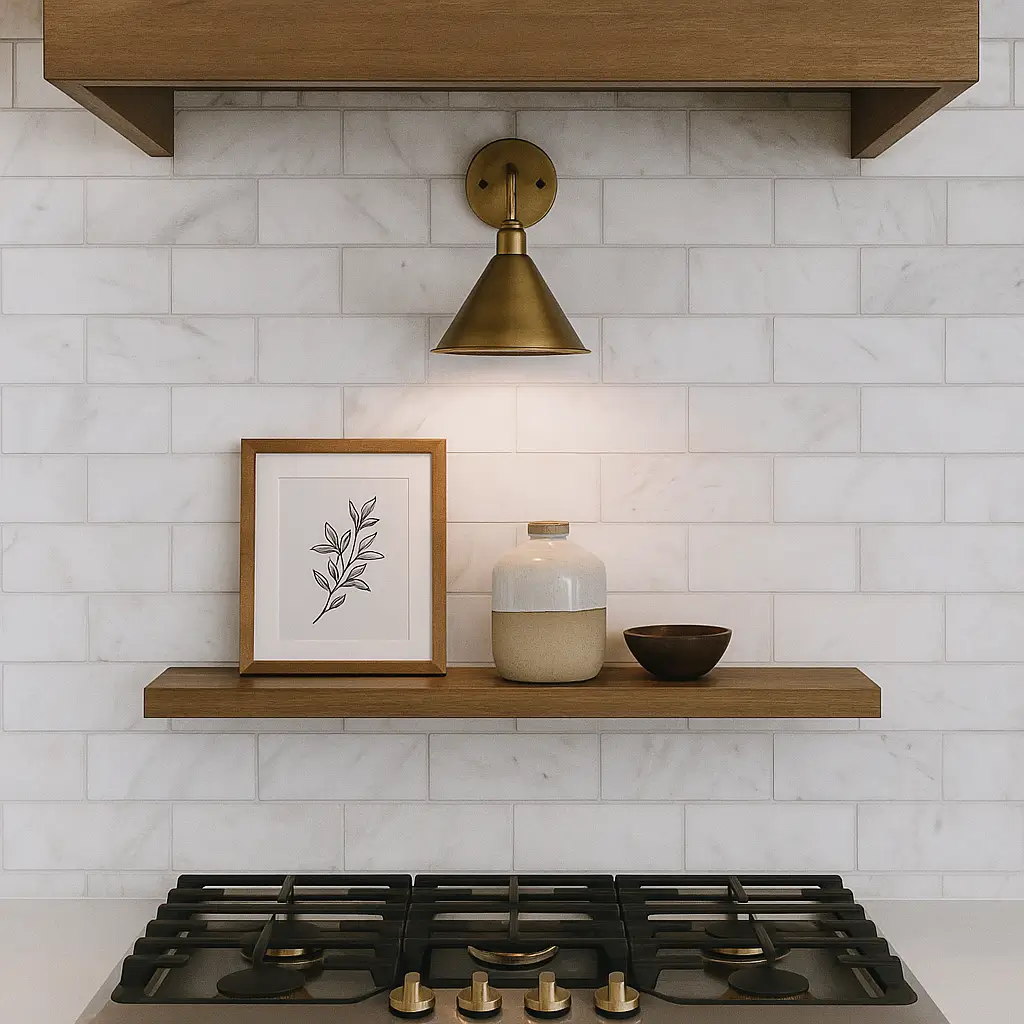
When Marisa and Daniel started their kitchen remodel in Orlando, they agreed on almost everything: cabinetry, countertops, even the lighting. But the backsplash? That turned into their biggest debate.
“It’s just a backsplash,” Daniel said. “Exactly — and that’s why it should be fun,” Marisa replied.
Why the backsplash matters more than you think
At first glance, a backsplash feels like a background detail. But in design psychology, small vertical surfaces often draw the eye first. According to the 2025 Houzz Kitchen Trends Study, nearly 54% of homeowners choose to update their backsplash during a remodel, making it one of the most impactful style decisions.
And it’s not just about looks. A backsplash protects walls from grease, steam, and everyday messes — meaning your kitchen stays cleaner and lasts longer.
Finding middle ground
After some back and forth (and a lot of Pinterest boards), Marisa and Daniel found a compromise: a neutral subway tile layout… but with a colorful accent strip running behind the stove.
Designers often call this the “accent wall principle” — let one zone carry the boldness, while the rest stays calm. That way, personality doesn’t overwhelm function.
The numbers behind the sparkle
- According to the NKBA (National Kitchen & Bath Association), backsplash updates are one of the top three “small changes” homeowners say make their kitchens feel new again.
- The same Houzz study notes that ceramic and porcelain tiles remain the #1 choice (56%), but glass and mixed materials are gaining traction, especially among younger homeowners.
- And here’s the ROI kicker: while a backsplash alone won’t skyrocket home value, remodelers report it consistently increases buyer appeal — kitchens with updated backsplashes look “finished.”
My Orlando takeaway 🌴
In Florida, where bright sunlight pours into kitchens, backsplashes aren’t just decoration — they help balance light and color. Glossy tiles bounce brightness, while matte finishes soften glare. For homes with open layouts, the backsplash can even act as a subtle divider between kitchen and living spaces.